
“Dealing with cancer is challenging, I aim to treat patients with utmost care and professionalism and help them in winning over cancer”~ Dr. Saphalta Bhagmar
Kidneys are the two bean-shaped organs that filter blood and are located in the abdominal region on either side of the spine. Cell division is a normal process in our bodies, but when it becomes uncontrollable, it results in the growth of a tumor and, eventually, cancer. The process of uncontrolled cell division in kidneys leads to kidney cancer.
What are the symptoms of kidney cancer?
The symptoms of kidney cancer are not noticeable at the early stages and are often found accidentally through CT scans of other organs, hence it is frequently detected at an early stage when it is restricted to the kidney only. Continue reading ahead to know about the symptoms of kidney cancer in depth.
1. Early Symptoms of Kidney Cancer
Lack of symptoms is one of the numerous reasons that cancer is rarely discovered in its early stages. Similarly, the symptoms of kidney cancer do not appear until the illness has advanced to a later stage. However, here are some of the early signs and symptoms of kidney cancer that may be of concern:
- prolonged back discomfort, particularly below the ribcage,
- blood in the urine
- stomach pain
- bloating in the abdomen
- Swelling in the abdomen
- Excess fatigue
- Flank pain
- Recurrent fevers
- Sudden unexplained weight loss
- Anemia
- Enlarged veins in the testicles (varicocele), a symptom of kidney cancer in males
- High Blood pressure levels
What Are the First Signs of Kidney Cancer?
The first signs of kidney cancer can be subtle and may not always cause noticeable symptoms in the early stages. One of the most common warning signs is blood in the urine (hematuria), which may appear pink, red, or cola-colored. Other early symptoms can include persistent pain in the side or lower back, unexplained fatigue, loss of appetite, and unintended weight loss.
Many patients with early-stage kidney cancer experience less or no symptoms, which is why routine health check-ups and timely evaluation of unusual urinary habits are important. If symptoms persist or worsen, consulting a cancer specialist can help ensure early diagnosis and treatment.
Symptoms of Kidney Cancer in Females
Kidney cancer symptoms in females are often similar to those seen in males, but they can sometimes be mistaken for urinary tract infections, gynecological conditions, or hormonal changes. This can occasionally delay diagnosis.
Women with kidney cancer may experience:
- Blood in the urine
- Persistent pain in the lower back or side
- Unexplained weight loss
- Constant fatigue
- Loss of appetite
- Fever without infection
- Anemia
- Swelling in the legs or ankles
In some cases, symptoms may develop gradually and remain unnoticed until the disease progresses. Women who experience recurring urinary symptoms, visible blood in the urine, or persistent flank pain should seek medical evaluation. Early detection can significantly improve treatment outcomes.
Symptoms of Kidney Cancer in Males
Kidney cancer symptoms in males can vary depending on the size and stage of the tumor. While some men may have no symptoms during the early stages, others may notice urinary or systemic symptoms.
Common kidney cancer symptoms in men include:
- Blood in the urine
- Pain in the side or lower back
- Fatigue and weakness
- Unexplained weight loss
- Persistent fever
- Loss of appetite
- A lump or swelling in the abdomen
- An enlarged vein around the testicle (varicocele)
Because these symptoms may also occur with other medical conditions, a proper medical evaluation is essential for an accurate diagnosis.
Can Kidney Cancer Be Silent in the Early Stages?
Yes. Kidney cancer is often referred to as a “silent cancer” because many patients do not experience noticeable symptoms during the early stages. Small tumors are frequently discovered incidentally during imaging tests performed for unrelated health concerns.
As the tumor grows, symptoms such as blood in the urine, back pain, fatigue, and weight loss may begin to appear. This highlights the importance of regular medical evaluations, especially for individuals with risk factors such as smoking, obesity, high blood pressure, or a family history of kidney cancer.
Kidney Cancer Symptoms by Stage
Stage 1 Kidney Cancer Symptoms
Stage 1 kidney cancer often shows no symptoms. Some occasional symptoms may include:
- Occasional blood in urine
- Mild discomfort in the side
- Fatigue
Stage 2 Kidney Cancer Symptoms
As the tumor grows, symptoms may become more noticeable, including:
- Visible blood in urine
- Persistent flank pain
- Fatigue
- Reduced appetite
Stage 3 Kidney Cancer Symptoms
Stage 3 kidney cancer may produce:
- Increasing abdominal or back pain
- Significant fatigue
- Weight loss
- Swelling in the legs
- Anemia
Stage 4 Kidney Cancer Symptoms
Advanced kidney cancer may cause:
- Severe bone pain
- Chronic cough
- Shortness of breath
- Significant weight loss
- Extreme fatigue
- Neurological symptoms if cancer spreads
Early Symptoms vs Advanced Symptoms of Kidney Cancer
| Early Symptoms | Advanced Symptoms |
| Blood in urine | Severe weight loss |
| Mild back pain | Bone pain |
| Fatigue | Chronic cough |
| Loss of appetite | Breathing difficulties |
| Intermittent fever | Significant weakness |
Recognizing symptoms early and seeking prompt medical attention can improve the chances of successful treatment.
Can Kidney Cancer Cause Back Pain?
Yes. Persistent pain in the side, flank, or lower back can be a symptom of kidney cancer. The pain is usually located on one side of the body and may not improve with rest or routine pain medications. While back pain is commonly caused by muscle strain or spinal conditions, ongoing pain accompanied by blood in the urine or unexplained weight loss should be evaluated by a healthcare professional.
Is Blood in Urine Always a Sign of Kidney Cancer?
Not necessarily. Blood in the urine can occur due to urinary tract infections, kidney stones, prostate conditions, or other urinary tract disorders. However, visible blood in the urine should never be ignored because it is one of the most common warning signs of kidney cancer. Medical evaluation is important to determine the underlying cause.
When Should You See a Cancer Specialist?
You should consider consulting a specialist if you experience:
- Blood in the urine
- Persistent side or back pain
- Unexplained weight loss
- Ongoing fatigue
- Loss of appetite
- Recurrent fever without infection
- A lump in the abdomen
Early diagnosis can improve treatment options and outcomes, making prompt evaluation essential whenever concerning symptoms arise.
Causes
While the actual and specific cause of kidney cancer is still unknown, some risk factors, such as smoking, obesity, and heredity (family history of cancer) are significantly associated with the illness.
General Health causes:
Age: As people get older, their chances of acquiring kidney cancer rises.
Gender: Men have an increased chance of developing kidney cancer than women.
Obesity: Excess weight is a hub of diseases and hence might raise chances of developing kidney cancer.
High blood pressure: People who have high blood pressure are at a higher risk of developing kidney cancer.
Dialysis: People who have been on dialysis for a long period are more likely to get kidney cancer.
Genetic causes:
People with a family history of genetic abnormalities or inherited genetic syndromes are more likely to develop kidney cancer. Following are some of the syndromes associated with the prevalence of kidney cancer:
- Von Hippel-Lindau disease, a genetic abnormality that results in kidney tumors.
- Hereditary papillary renal cell carcinoma, a kind of kidney cancer that commonly affects both kidneys.
- Birt-hogg-Dube syndrome is a cutaneous disorder that affects hair follicles and is linked kidney tumors
- Hereditary renal oncocytoma is a form of kidney tumor with a minimal chance of progression to cancer
- Hereditary leiomyoma renal cell carcinoma is an uncommon gene mutation that produces skin lumps and, in women, fibroids in the uterus.
Lifestyle causes:
Tobacco use: ingestion of tobacco increases the risk of getting kidney cancer.
Occupational exposure: Asbestos and/or cadmium (a kind of metal used in the manufacturing of batteries, plastics, etc.) exposure might raise the chances of acquiring kidney cancer.
2. End-Stage Symptoms of Kidney Cancer
The symptoms of end-stage kidney cancer develop when the kidney has been suffering for a long time and when it starts worsening. Following are those symptoms:
- Changes in the skin and nail color, either too pale or too dark
- Joint aches
- Drowsiness
- Confusion
- Difficulty in focusing
- Numbness in the extremities of the body
- Changes in breath odor
- Bruising
- Bleeding nose
- Presence of blood in the stools
- Increased thirst
- Recurring hiccups
- Decreased libido
- Insomnia
- Nausea
- Swelling of the extremities
3. When To See Your Doctor?
If you are experiencing any of the early symptoms of kidney cancer that are mentioned above, it is highly advisable to contact your doctor. Apart from other questions, your doctor will need to know how long and how regularly you have been experiencing the symptoms (s). This is done to aid in the identification of the cause of cancer.
If cancer is discovered, the major aim is towards resolving the symptom which is a critical component of cancer treatment and therapy. This is termed palliative care or supportive care. It is often started soon after diagnosis and continues throughout treatment. Schedule an appointment with your doctor to address and discuss your early symptoms of kidney cancer.
4. Faq
What are the signs of kidney cancer in adults?
The common signs of kidney cancer in adults are blood in urine, abdominal pain especially near the ribcage, fatigue, unexplained weight loss, anemia, flank pain, etc.
Is Kidney Cancer Curable?
Kidney cancer is usually treatable if diagnosed early. Even in the most advanced stages, new therapies and procedures have resulted in significantly higher overall cure rates.
What are the different types of kidney cancer?
There are numerous types of kidney cancer and there are more than 30 kidney cancer cells. The different types of kidney cancer are:
- Renal cell carcinoma (This is more prevalent in adults)
- Urothelial carcinoma
- Wilms tumor (mostly seen in children)
- Lymphoma
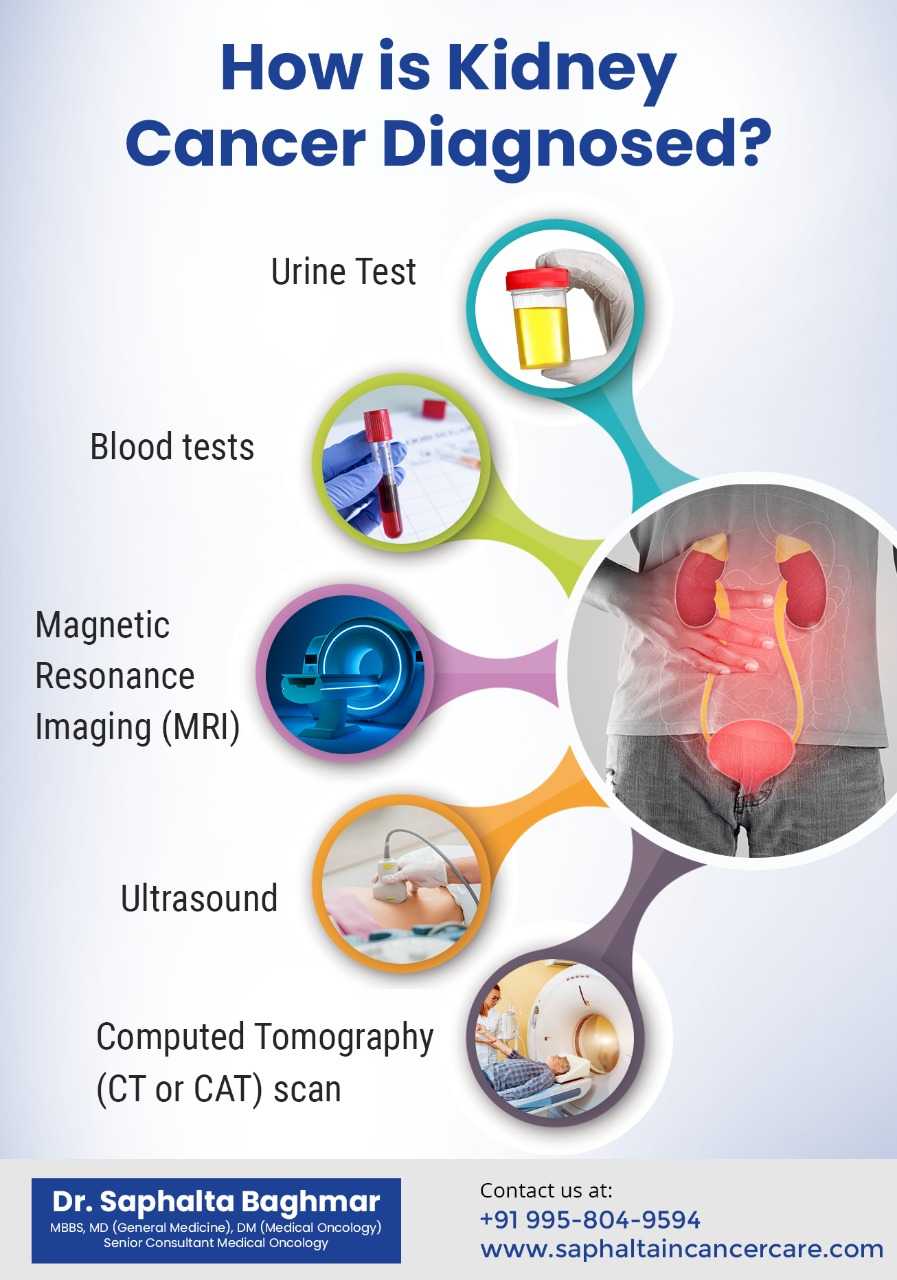
Tests For Diagnosing Kidney Cancer
There are several tests devised to diagnose kidney cancer and it includes :
- Blood test
- Urine test
- MRI
- CT/CAT scan
- Cystoscopy
- Biopsy
- Nephro-ureteroscopy
Take Away
The symptoms of kidney cancer are difficult to detect at first. Dr. Saphalta Baghmar’s clinic is equipped with leading technologies and a dedicated staff that facilitates the early identification of cancer and gives appropriate treatment. Dr. Saphalta is a Best cancer specialist in Delhi NCR region with experience of over 11 years. The clinic has extensive training in treating cancer patients with care. With the availability of special cancer therapies and cutting-edge technologies, in the clinic, Dr. Saphalta Baghmar’s clinic is a one-stop solution for all the oncology problems.
FAQ
1. What are early signs of kidney cancer?
Early kidney cancer symptoms can often be mild and go overlooked. Hematuria, or blood in the urine that appears pink or crimson, is one of the most common early symptoms. Some people have chronic side or lower back discomfort, usually on one side, that is unrelated to an accident. In certain situations, a lump or mass may also be felt in the side or abdomen. Unexpected weariness, appetite loss, weight loss, fever without an illness, and anemia are further early warning indicators. Varicocele, or enlargement of the veins in the scrotum, can occasionally happen in men. Regular health examinations and timely medical evaluation of persistent symptoms are essential for early detection and improved treatment outcomes because early kidney cancer may be asymptomatic.
2. Can kidney cancer be treated?
Yes, kidney cancer is treatable, and when diagnosed early, results tend to be excellent. The cancer’s stage, tumor size, spreading, and the patient’s general condition all influence the course of treatment. The most popular and successful treatment for early-stage kidney cancer is surgery, which may entail removing the entire kidney (radical nephrectomy) or just a portion of it (partial nephrectomy). Minimally invasive methods like ablation may be applied in specific situations. Immunotherapy and tailored therapy have greatly increased survival and quality of life for advanced or metastatic kidney cancer. Although less frequently utilized, radiation and chemotherapy may be beneficial in some circumstances. Many patients now have long-term disease control thanks to advancements in modern treatment.
Individualized and empathetic care can be crucial if you or a loved one has been diagnosed with kidney cancer. Saphalta In Cancer Care offers patient-centred oncology services that combine state-of-the-art care with emotional support and open communication throughout the entire process. Saphalta’s comprehensive team of skilled professionals provides individualized treatment programs, such as immunotherapy, targeted therapy, and surgery, based on your particular requirements.
Their dedication to patient education, affordability, and high-quality care gives you the confidence to make decisions about your health journey. To find out more about how Saphalta can work with you to achieve the best results, visit saphaltaincancercare.com.
3. What is the survival rate of kidney cancer?
The stage at diagnosis and the timing of treatment initiation have a significant impact on the kidney cancer survival rate. The 5-year survival rate is around 90% or greater when kidney cancer is discovered at an early, localized stage (limited to the kidney). The 5-year survival rate falls to roughly 60–70% if the cancer has spread to adjacent tissues or lymph nodes (regional stage). The 5-year survival rate is lower, usually between 10% and 15%, when kidney cancer has spread to distant organs, including the brain, lungs, or bones (advanced or metastatic stage). Even in advanced stages, however, current developments in immunotherapy and tailored therapy have greatly increased outcomes and life expectancy. Improving survival depends heavily on prompt, proper therapy and early diagnosis.
4. Is kidney cancer 100% curable?
Although kidney cancer is not always curable, it can often be fully treated if caught early. Many people have long-term, cancer-free survival if the malignancy is limited to the kidney and treated quickly, usually with surgery. A full recovery is less likely, though, if kidney cancer is discovered at a later stage or has spread to other areas of the body. In certain situations, contemporary therapies like immunotherapy and targeted therapy can effectively manage the illness, delay its course, and greatly increase survival and quality of life. The likelihood of favorable outcomes is significantly increased by early diagnosis, adequate treatment, and routine follow-up.
5. Can kidney cancer be treated?
Kidney cancer is treatable, and the course of treatment is determined by the patient’s general health, tumor size, dissemination, and disease stage. The most popular and successful treatment for kidney cancer in its early stages is surgery, which may entail:
- Partial nephrectomy: Only the tumor is removed during a partial nephrectomy, leaving healthy kidney tissue intact.
- Radical nephrectomy: When a radical nephrectomy is performed, the kidney and any surrounding tissue are removed.
Treatment options for metastatic or advanced kidney cancer may include:
- Drugs that target particular cancer cell pathways are known as targeted therapy.
- Immunotherapy: therapies that support the body’s defenses against malignancy
- Radiation is applied for symptom care in few patients. Chemotherapy is of no use in RCC
Many individuals can attain long-term control or remission with prompt intervention and contemporary therapy alternatives. To keep an eye out for recurrence, routine follow-ups are crucial.